Patents are a cornerstone of intellectual property systems, granting inventors exclusive legal rights to exploit their inventions for a limited time in exchange for public disclosure. Beyond legal protection, patents play a vital role in fostering innovation, advancing technology, and supporting knowledge-based economies.
By securing a patent, innovative ideas can be transformed into valuable legal assets that can be licensed, sold, or commercially exploited—giving individuals and businesses a sustainable competitive edge in both local and global markets.
What is the Paris Convention for Intellectual Property?
Established in 1883, the Paris Convention is one of the earliest international agreements designed to protect industrial property, including patents, trademarks, and industrial designs. It laid the foundation for global IP protection.
A key principle of the Convention is national treatment, ensuring that citizens of member states receive the same protection as nationals of other member countries. It also introduces the priority right, allowing inventors 12 months from the first filing date to apply in other countries without losing their original priority.
What is the PCT system?
The Patent Cooperation Treaty (PCT), administered by the World Intellectual Property Organization (WIPO), is a powerful international filing system.
It enables inventors to submit a single international application recognized in more than 150 countries, instead of filing separately in each jurisdiction. While it does not grant a global patent, it streamlines the process and provides an extended timeframe—up to 30 or 31 months—before entering national phases.
This additional time allows inventors to evaluate markets, seek investors, and refine their inventions.
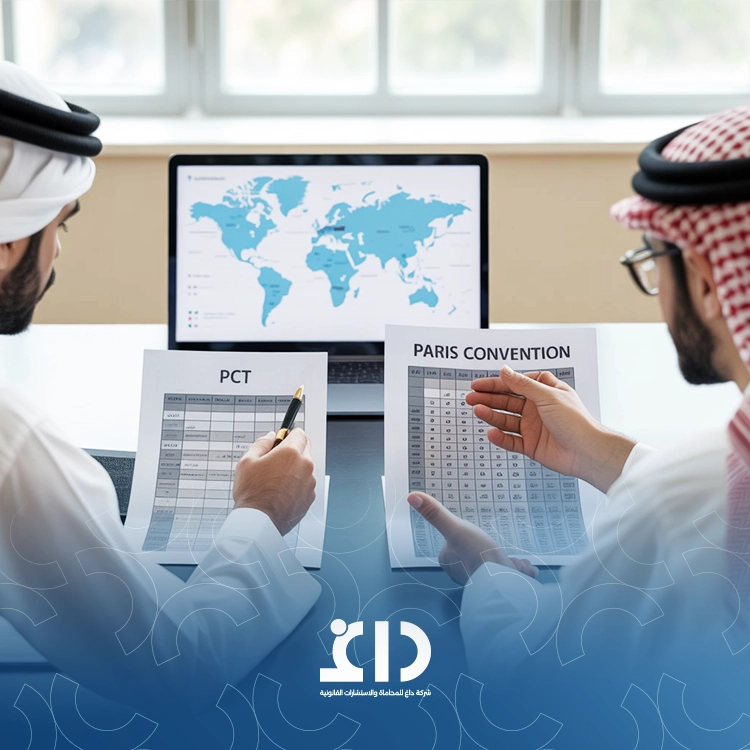
Key differences between the Paris Convention and PCT
Although both systems aim to protect inventions internationally, they differ in scope, process, cost, and flexibility.
- Paris Convention:
Requires separate filings in each country within 12 months. It is more suitable for limited geographic protection and offers lower initial costs, but requires managing multiple national applications. - PCT System:
Allows a unified international application with extended decision time. It offers greater flexibility and centralized management, making it ideal for global expansion despite higher upfront costs.
Which option is better in Saudi Arabia?
The choice depends on your protection strategy:
- For local or regional protection, the Paris Convention is practical and cost-effective.
- For international expansion and attracting investors, the PCT system is the preferred route.
The Saudi Authority for Intellectual Property (SAIP) enables applicants to file through both systems efficiently and in line with global standards.
Practical steps for patent registration
Under the Paris Convention:
- File a local application with SAIP
- Submit applications in other countries within 12 months
- Proceed with examination in each country separately
Under the PCT system:
- File a single international application
- Conduct an international search
- Enter national phases within 30 months
Costs and timelines
- Paris Convention: Costs vary by country; timeline typically ranges from 2 to 4 years
- PCT: Initial cost ranges between $3,500–$5,000, with total timelines of 3 to 5 years
Why consult an IP lawyer?
Working with an intellectual property lawyer is crucial when navigating international systems. A legal expert can:
- Identify the best filing strategy
- Draft strong patent specifications
- Manage procedures across jurisdictions
- Ensure full legal protection and minimize risks
Conclusion
Protecting innovation is no longer optional in today’s competitive and technology-driven world. Patents remain the most effective legal tool to secure inventors’ rights and encourage investment in research and development.
Both the Paris Convention and the PCT system are essential frameworks for global patent protection. While the former offers cost-effective protection in limited regions, the latter provides broader international coverage and flexibility.
In Saudi Arabia, SAIP plays a vital role in supporting innovators and aligning the Kingdom’s IP ecosystem with global standards—positioning it as a growing hub for innovation in the region.